




Circadian rhythms — the basis of metabolic balance and health
Personalized medicine is based on the understanding that each person's body functions according to its own biological rhythm. Health is influenced not only by genetic and metabolic factors, but also by day and night cycles, diet, physical activity, and light exposure.
Effective solutions start with understanding your own biological clock
Scientific research confirms that circadian rhythm disorders are associated with the development of metabolic, cardiovascular, neurological, and age-related diseases. That is why analysis of the circadian system is becoming the basis for accurate and personalized decisions in medicine.
Comprehensive analysis of the body's circadian system
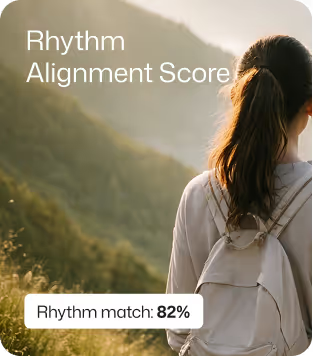
RhythmoCare evaluates not individual indicators, but their interaction within a single biological system.

Sleep phases and structure
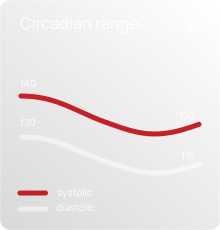

In calm and in motion


Daytime and nighttime fluctuations


Circadian changes
Time and regularity
Intensity and duration
Adaptation to the environment
Knowing your circadian rhythm status with a chronotherapeutic approach increases the effectiveness of anti-aging:
Reduction of oxidative stress and increased insulin sensitivity with intermittent fasting
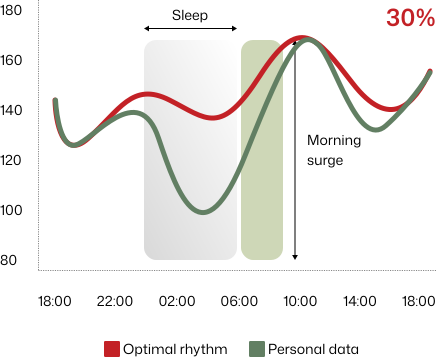
Scientific researchImproving the effectiveness of antihypertensive therapy by adjusting the timing of medication intake
Publications in journalsRecommendations at the right biological time
RhythmoCare turns data into concrete actions.

Optimize sleep and daily routine

Adjust meal times

Plan physical activity

Determine the optimal time for procedures
Recommendations are formulated taking into account chronotype, seasonality, and individual lifestyle.
Tools for daily decisions and clinical work

For people who want to live at their own pace, RhythmoCare helps:
• restore balance
• improve quality of life
• prevent health problems
• make informed decisions every day

For medical professionals and clinics, RhythmoCare is a tool for personalizing therapy.
It allows you to:
• analyze patients' circadian rhythms
• select the optimal time for treatment
• evaluate the effectiveness of therapy
• work with data in dynamics
From personal rhythm to a scalable
medical platform
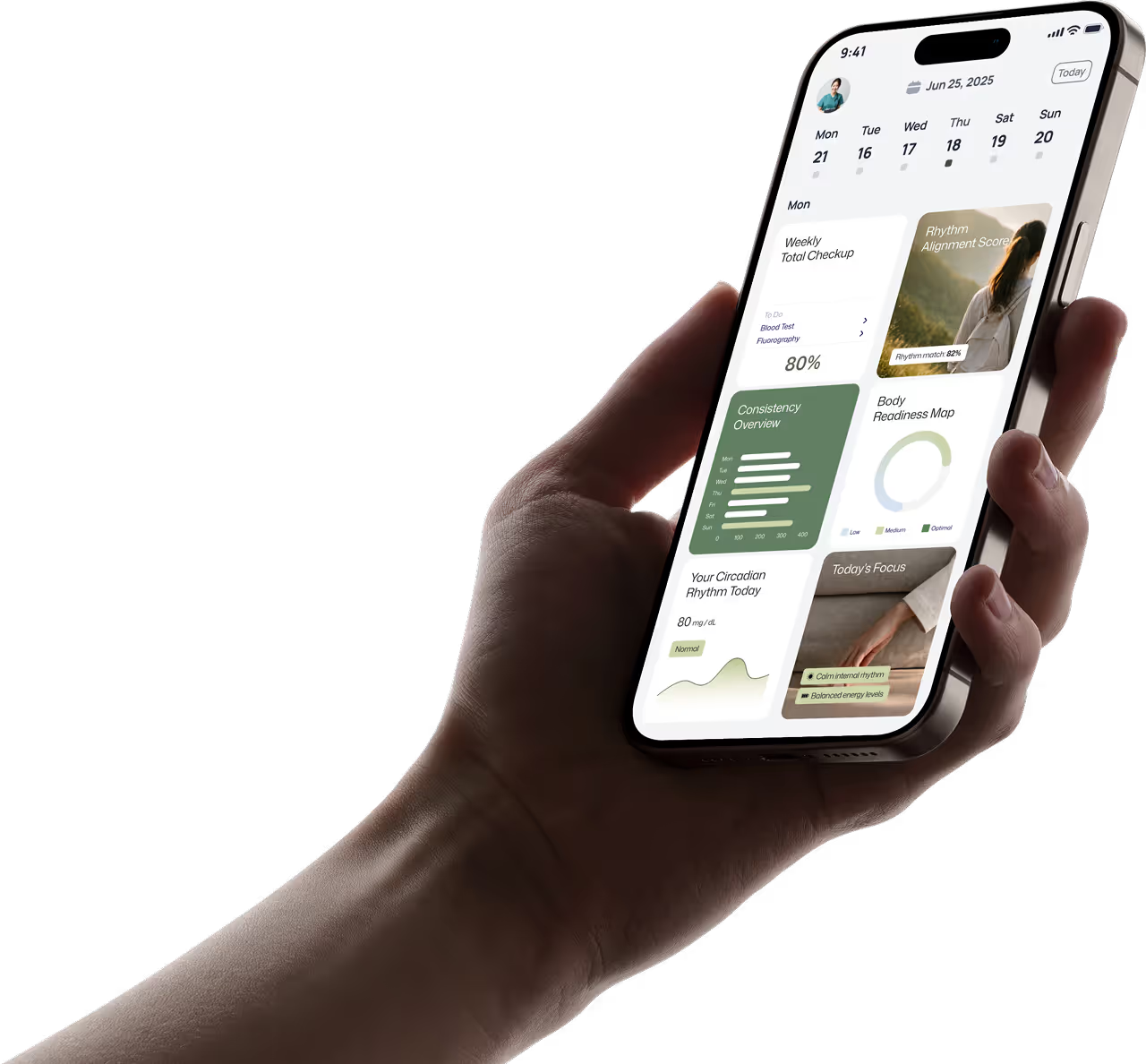
RhythmoCare begins with a personalized analysis of the user's circadian rhythms, but the product architecture has been designed from the outset as a scalable digital platform.

The product works with biological data in dynamics, forming a single data layer of circadian rhythms for individual recommendations, clinical interpretation, and the development of preventive and therapeutic models.
In Ukraine, this approach is innovative and has no direct analogues in this format.
Choose a plan for your journey to health

Standard indicators (temperature, pressure, heart rate)
Possible first signs of desynchronosis – how much % differs from the standard after 7 days of measurements;
Brief recommendations on diet, physical activity, and sleep at the end of each week;
All features of the free package
Additional variables (applying parameters to the current length of day/night), connection with seasonality (in conditions of long-term use), consideration of time zone changes during flights, and relevant recommendations;
Correlation between indicators (possibility of comparison with different chronotypes: owl, lark, pigeon) and construction of complex correlation graphs of parameter interaction;
Detection of desynchronosis;
Involvement of doctors (separate application for patient users (with the ability to connect an external doctor to the analysis data) and doctor users (with a list of patients and their circadian rhythm records);
Recommendations with specific times for taking medication;
Recording the time when the tests were taken and the conclusion about the stage of the circadian rhythm at which they were taken – at the moment of deviation from the standard, and assistance in interpreting the results or a recommendation for retesting.
Data entry and synchronization if melatonin/cortisol was measured several times during the day (from saliva, urine) to establish a clear circadian rhythm
Scientific base.
Personalized solutions

Evidence-based medicine


Chronobiology

Personalized approach
Questions about RhythmoCare


These are rhythms that are approximately equal to 24 hours.
It is a regulatory system of the body that synchronizes physiological and behavioral processes with circadian rhythms, including the sleep-wake cycle, daily fluctuations in hormone secretion, and rhythmic changes in metabolic and enzymatic activity.
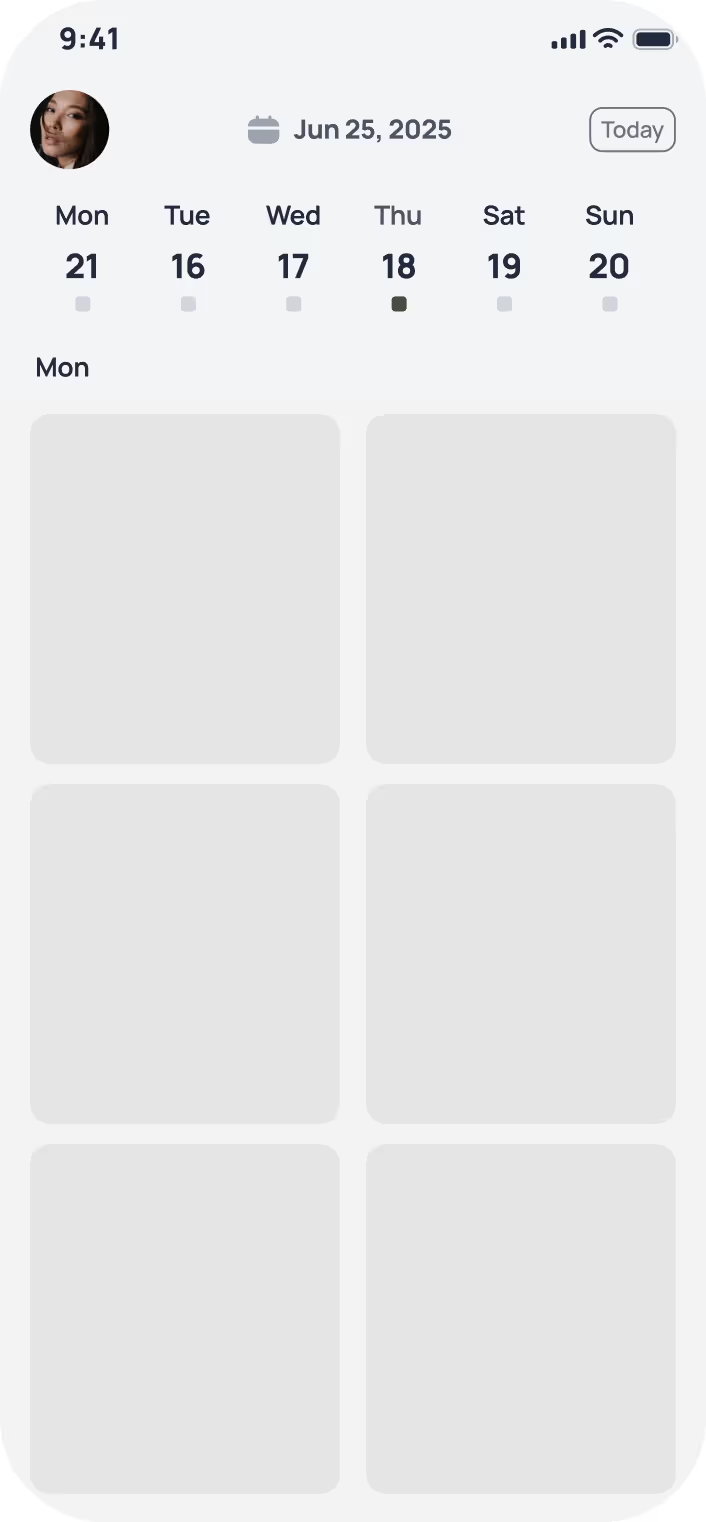
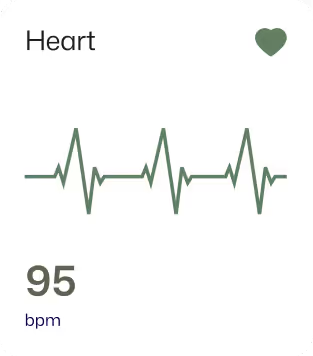
The app analyzes data from smartwatches and trackers: sleep, heart rate, body temperature, blood pressure, and activity level.
RhythmoCare is a digital application for personalized health analysis. It does not replace a doctor, but can be used as an additional tool for decision-making.
No. RhythmoCare works with popular smartwatches and trackers.
The app is currently under development. You can leave your email address to receive a notification when it launches.
Yes. RhythmoCare has separate capabilities for healthcare professionals and clinical use.


